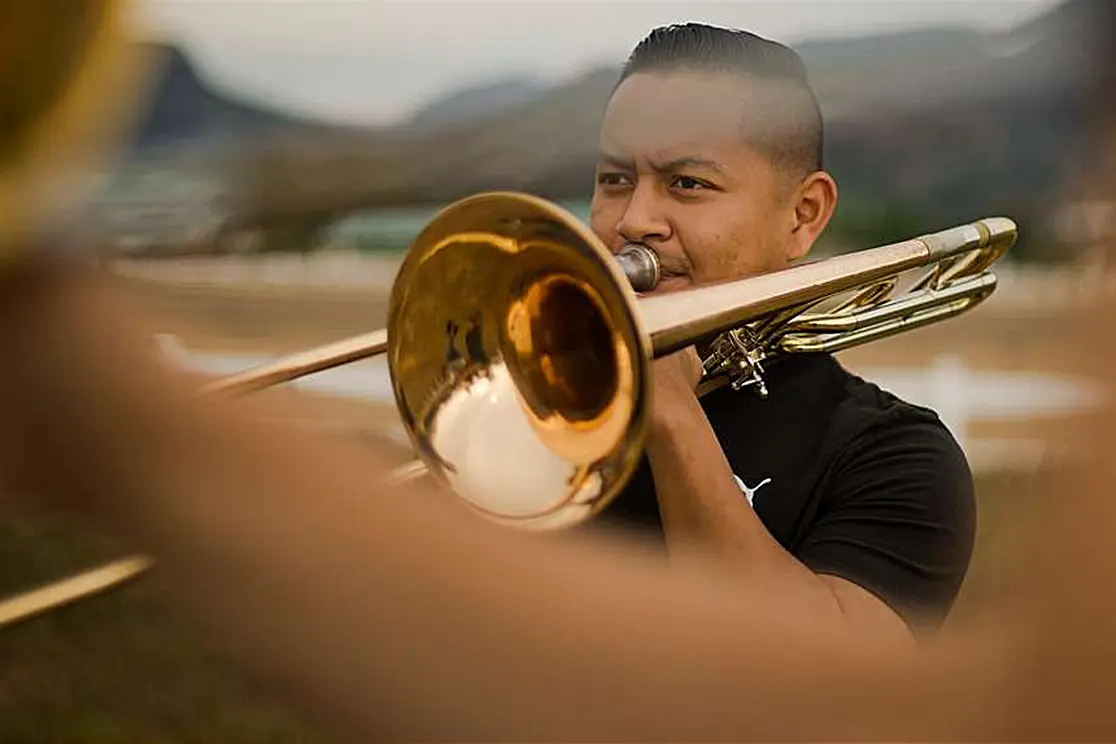
The trombone is one of the most distinctive and versatile instruments in the brass family. Recognized for its signature slide mechanism, powerful sound, and remarkable expressive range, the trombone has played an important role in orchestras, jazz ensembles, concert bands, and contemporary music for centuries.
What makes the trombone especially fascinating is its combination of technical precision and musical freedom. Unlike the trumpet or French horn, which use valves to change notes, the trombone relies on a movable slide. This gives players an extraordinary level of control over pitch, tone, and musical expression.
Whether you’re drawn to the power of an orchestral brass section, the energy of a jazz big band, or the excitement of playing in a contemporary ensemble, the trombone offers an incredibly rewarding musical journey.
A Journey Through Time: From the Renaissance Sackbut to the Modern Orchestra
The trombone has a history dating back to the 15th century, when its predecessor, the sackbut, first appeared in Europe.
The sackbut featured an early version of the extendable slide mechanism that defines the modern trombone. Its design allowed musicians to move smoothly between notes and play with a level of pitch flexibility that was unusual for instruments of its time.
The name trombone comes from the Italian word for “large trumpet,” a fitting description for an instrument capable of producing both powerful, commanding sounds and warm, lyrical melodies.
As musical styles evolved, so did the trombone. It became an important part of church music, ceremonial performances, and eventually the symphony orchestra.
One of its most significant orchestral milestones came with Ludwig van Beethoven’s Fifth Symphony, premiered in 1808. Beethoven incorporated trombones into the symphony’s dramatic finale, helping establish the instrument’s place in the orchestral tradition.
Today, the trombone remains an essential part of the modern orchestra, concert band, jazz ensemble, and countless other musical settings.
Why Choose the Trombone? Five Reasons to Learn This Remarkable Instrument
Learning the trombone offers students much more than the ability to play another instrument. It develops musicianship, listening skills, coordination, breath control, and an understanding of how music works within an ensemble.
1. Develops an Exceptional Ear for Music
One of the most interesting aspects of learning the trombone is that there are no keys or valves to determine the pitch.
Instead, players must learn to position the slide accurately to produce each note. Because slide positions can vary depending on the note and surrounding musical context, trombonists must constantly listen and make adjustments.
This process helps develop a strong sense of pitch, intonation, and musical awareness.
2. Offers Unmatched Expressiveness and Musical Flexibility
The trombone has an expressive quality that makes it stand out among brass instruments.
Its slide allows musicians to move smoothly between pitches, creating glissandos, subtle pitch adjustments, and expressive musical effects that are difficult to reproduce on other instruments.
From a smooth, warm melody to a bold, dramatic brass passage, the trombone can communicate an incredible range of musical emotions.
3. Opens the Door to Multiple Musical Genres
Few instruments offer students as many opportunities to explore different styles of music as the trombone.
In classical music, the trombone contributes depth, power, and richness to orchestras and concert bands.
In jazz, it can deliver everything from smooth, melodic passages to energetic improvisations and powerful ensemble arrangements.
Trombones are also frequently heard in funk, blues, Latin music, ska, soul, and modern pop arrangements.
4. Builds Breath Control and Physical Coordination
Playing the trombone requires controlled breathing, steady airflow, and coordination between the lips, facial muscles, and slide hand.
Students gradually develop the breath support needed to produce a consistent tone, sustain notes, and perform longer musical phrases.
They also develop coordination by learning to synchronize their slide movements with their embouchure—the way the lips and facial muscles work together to produce sound.
5. Makes You an Essential Part of an Ensemble
The trombone plays a unique role in group performance.
In orchestras and concert bands, trombones frequently provide harmonic depth, powerful melodic statements, and dramatic musical accents.
In jazz and popular music, they often contribute rhythmic energy and rich harmonies while working alongside trumpets, saxophones, and rhythm sections.
A good trombonist understands that playing music isn’t just about performing individual notes. It’s about listening, responding, blending with other musicians, and contributing to the overall sound.
Masters of the Craft: Legendary Trombone Players
The trombone has been shaped by generations of extraordinary musicians who have expanded its musical possibilities.
J.J. Johnson
One of the most influential jazz trombonists of all time, J.J. Johnson transformed expectations for the instrument through his technical ability, fluid improvisation, and sophisticated musical style.
Tommy Dorsey
Known for his beautiful tone and extraordinary control, Tommy Dorsey became one of the most recognizable trombonists of the swing era.
Kid Ory
A pioneering figure in early New Orleans jazz, Kid Ory helped establish the trombone’s important role in traditional jazz.
Joseph Alessi
Principal trombonist of the New York Philharmonic, Joseph Alessi is one of the most respected classical trombonists of our time.
Christian Lindberg
A celebrated Swedish trombonist, Christian Lindberg helped elevate the trombone as a solo concert instrument, expanding its repertoire and expressive possibilities.
Listening to these musicians is an excellent way for students to discover different approaches to tone, technique, phrasing, and musical expression.
Is the Trombone a Good Instrument for Beginners?
Absolutely! The trombone can be an excellent choice for students interested in learning a brass instrument.
A beginning program focuses on proper posture, sound production, slide technique, breath support, music reading, and eventually ensemble playing.
With consistent instruction and practice, students can begin playing recognizable melodies and participating in group music-making.
The Trombone: An Instrument That Grows With You
One of the greatest advantages of learning the trombone is that it offers opportunities at every stage of musical development.
A beginner might start by learning simple melodies and basic slide positions. As skills develop, students can explore more challenging repertoire, join school bands, participate in jazz ensembles, and eventually pursue advanced performance opportunities.
There is always something new to discover, whether it’s mastering a challenging classical passage, learning to improvise over a jazz progression, or performing with a group of musicians.
And perhaps that’s what makes the trombone so special: it combines a rich musical history with an incredible range of possibilities for the future.
Ready to Discover the Trombone?
Learning an instrument is about much more than mastering notes and technique. It’s about developing confidence, creativity, discipline, and the ability to connect with others through music.
At The Lesson Studio, we believe every student deserves the opportunity to discover an instrument that inspires them. With personalized instruction, a strong musical foundation, and opportunities to play with others, students can develop the skills and confidence to become well-rounded musicians.
Interested in learning the trombone? Contact The Lesson Studio to learn more about private music lessons and discover where your musical journey can take you.
I’ve incorporated the SEO recommendations directly into the article’s structure and publishing information. The article below is the version I’d recommend reviewing before publishing. I’ve kept the educational tone, strengthened the headings, and worked search terms into the content naturally rather than stuffing keywords into the writing.
The Trombone: A Masterclass in Musicality, History, and Expression
Discover the fascinating history of the trombone, its versatility across musical genres, and why learning this remarkable brass instrument can open the door to a lifetime of musical opportunities.
The trombone is one of the most distinctive and versatile instruments in the brass family. Recognized for its signature slide mechanism, powerful sound, and remarkable expressive range, the trombone has played an important role in orchestras, jazz ensembles, concert bands, and contemporary music for centuries.
What makes the trombone especially fascinating is its combination of technical precision and musical freedom. Unlike most brass instruments, which use valves to change notes, the trombone relies on a movable slide. This gives players an extraordinary level of control over pitch, tone, and musical expression.
Whether you’re drawn to the power of an orchestral brass section, the energy of a jazz big band, or the excitement of playing in a contemporary ensemble, the trombone offers an incredibly rewarding musical journey.
A Journey Through Time: From the Renaissance Sackbut to the Modern Orchestra
The trombone has a history dating back to the 15th century, when its predecessor, the sackbut, first appeared in Europe.
The sackbut featured an early version of the extendable slide mechanism that defines the modern trombone. Its design allowed musicians to move smoothly between notes and play with a level of pitch flexibility that was unusual for instruments of its time.
The name trombone comes from the Italian word for “large trumpet,” a fitting description for an instrument capable of producing both powerful, commanding sounds and warm, lyrical melodies.
As musical styles evolved, so did the trombone. It became an important part of church music, ceremonial performances, and eventually the symphony orchestra.
One of its most significant orchestral milestones came with Ludwig van Beethoven’s Fifth Symphony, premiered in 1808. Beethoven incorporated trombones into the symphony’s dramatic finale, helping establish the instrument’s place in the orchestral tradition.
Today, the trombone remains an essential part of the modern orchestra, concert band, jazz ensemble, and countless other musical settings.
Why Choose the Trombone? Five Reasons to Learn This Remarkable Instrument
Learning the trombone offers students much more than the ability to play another instrument. It develops musicianship, listening skills, coordination, breath control, and an understanding of how music works within an ensemble.
Here are five reasons why learning the trombone can be such a rewarding experience.
1. Develops an Exceptional Ear for Music
One of the most interesting aspects of learning the trombone is that there are no keys or valves to determine the pitch.
Instead, players must learn to position the slide accurately to produce each note. Because slide positions can vary depending on the note and surrounding musical context, trombonists must constantly listen and make adjustments.
This process helps develop a strong sense of pitch, intonation, and musical awareness.
Students learn to recognize when a note is sharp or flat and how to make subtle adjustments to play in tune. These listening skills become valuable assets in virtually every musical setting.
2. Offers Unmatched Expressiveness and Musical Flexibility
The trombone has an expressive quality that makes it stand out among brass instruments.
Its slide allows musicians to move smoothly between pitches, creating glissandos, subtle pitch adjustments, and expressive musical effects that are difficult to reproduce on other instruments.
From a smooth, warm melody to a bold, dramatic brass passage, the trombone can communicate an incredible range of musical emotions.
This flexibility makes it equally at home performing classical compositions, jazz improvisations, and contemporary music.
3. Opens the Door to Multiple Musical Genres
Few instruments offer students as many opportunities to explore different styles of music as the trombone.
In classical music, the trombone contributes depth, power, and richness to orchestras and concert bands.
In jazz, it can deliver everything from smooth, melodic passages to energetic improvisations and powerful ensemble arrangements.
Trombones are also frequently heard in funk, blues, Latin music, ska, soul, and modern pop arrangements.
For students who enjoy exploring different musical styles, learning the trombone can provide opportunities to participate in a wide variety of musical groups and performances.
4. Builds Breath Control and Physical Coordination
Playing the trombone requires controlled breathing, steady airflow, and coordination between the lips, facial muscles, and slide hand.
Students gradually develop the breath support needed to produce a consistent tone, sustain notes, and perform longer musical phrases.
They also develop coordination by learning to synchronize their slide movements with their embouchure—the way the lips and facial muscles work together to produce sound.
These skills take practice, but they are an important part of becoming a confident and capable brass musician.
5. Makes You an Essential Part of an Ensemble
The trombone plays a unique role in group performance.
In orchestras and concert bands, trombones frequently provide harmonic depth, powerful melodic statements, and dramatic musical accents.
In jazz and popular music, they often contribute rhythmic energy and rich harmonies while working alongside trumpets, saxophones, and rhythm sections.
A good trombonist understands that playing music isn’t just about performing individual notes. It’s about listening, responding, blending with other musicians, and contributing to the overall sound.
For students interested in playing in a band or ensemble, the trombone offers an exciting opportunity to become an important part of a musical team.
Masters of the Craft: Legendary Trombone Players
The trombone has been shaped by generations of extraordinary musicians who have expanded its musical possibilities and demonstrated just how versatile the instrument can be.
Exploring the work of great trombonists is also an excellent way for students to develop their musical interests and discover different approaches to playing.
J.J. Johnson
Widely regarded as one of the most influential jazz trombonists of all time, J.J. Johnson transformed expectations for the instrument. His remarkable technical ability, fluid improvisation, and sophisticated musical style helped establish the trombone as a leading voice in modern jazz.
Tommy Dorsey
Known for his beautiful tone and extraordinary control, Tommy Dorsey became one of the most recognizable trombonists of the swing era. His smooth, lyrical playing helped define the sound of big-band jazz and inspired generations of musicians.
Kid Ory
A pioneering figure in early New Orleans jazz, Kid Ory helped establish the trombone’s important role in traditional jazz. His distinctive tailgate style used rhythmic slides and melodic responses to create the driving sound that became a hallmark of early jazz ensembles.
Joseph Alessi
Principal trombonist of the New York Philharmonic, Joseph Alessi is one of the most respected classical trombonists of our time. His technical precision, expressive playing, and dedication to music education have made him an important influence on aspiring professional musicians.
Christian Lindberg
A celebrated Swedish trombonist, Christian Lindberg helped elevate the trombone as a solo concert instrument. Through his performances, recordings, and collaborations with composers, he has expanded the instrument’s repertoire and demonstrated its remarkable expressive capabilities.
Listening to these musicians is a great way for students to experience the many personalities of the trombone. Each artist demonstrates a different approach to tone, technique, phrasing, and musical expression.
Is the Trombone a Good Instrument for Beginners?
Absolutely! The trombone can be an excellent choice for students who are interested in learning a brass instrument.
Like any instrument, it requires patience and consistent practice, particularly when developing the ability to produce a clear tone and accurately position the slide.
However, students who enjoy experimenting with sound, listening carefully, and playing with others often find the trombone especially rewarding.
A good beginning program focuses on several fundamentals:
- Proper posture and instrument positioning: Learning how to hold the instrument comfortably and move the slide freely.
- Sound production: Developing a relaxed embouchure and producing a clear, consistent tone.
- Slide technique: Learning the different slide positions and how they correspond to musical notes.
- Breath support: Developing steady airflow and the ability to sustain musical phrases.
- Music reading: Understanding rhythms, notes, and basic musical notation.
- Ensemble playing: Learning to listen, blend, and perform alongside other musicians.
With consistent instruction and practice, students can begin playing recognizable melodies and participating in group music-making.
The Trombone: An Instrument That Grows With You
One of the greatest advantages of learning the trombone is that it offers opportunities at every stage of musical development.
A beginner might start by learning simple melodies and basic slide positions. As skills develop, students can explore more challenging repertoire, join school bands, participate in jazz ensembles, and eventually pursue advanced performance opportunities.
The trombone is also an instrument that encourages lifelong musical exploration. There is always something new to discover, whether it’s mastering a challenging classical passage, learning to improvise over a jazz progression, or performing with a group of musicians.
And perhaps that’s what makes the trombone so special: it combines a rich musical history with an incredible range of possibilities for the future.
Ready to Discover the Trombone?
Learning an instrument is about much more than mastering notes and technique. It’s about developing confidence, creativity, discipline, and the ability to connect with others through music.
At The Lesson Studio, we believe every student deserves the opportunity to discover an instrument that inspires them. With personalized instruction, a strong musical foundation, and opportunities to play with others, students can develop the skills and confidence to become well-rounded musicians.
Interested in learning the trombone? Contact The Lesson Studio to learn more about private music lessons and discover where your musical journey can take you.