
Updated: 02/22/2026
Music is a journey shaped by passion and practice. Every note you play and every rhythm you master adds to your growth as a musician. Whether you’re just starting out or have years of experience, improving your skills takes dedication—and the right approach to practicing a musical instrument. Here are some practical tips to help you grow and tackle common challenges along the way.
1. Music Needs a Structured Practice Routine
Improvement starts with intention. Instead of simply playing through pieces, set clear goals for each practice session—such as refining a tricky passage or strengthening a specific technique. Break difficult sections into smaller parts and work through them step by step. This focused approach keeps you organized and motivated, and it builds confidence as you see steady progress.
2. Focus on your Techniques
Strong technique is the foundation of confident playing. Set aside time for scales, arpeggios, and exercises tailored to your instrument. Focus on the details—accurate fingerings, steady breath control, clean articulation, or controlled bowing. Consistent technical practice develops muscle memory and makes challenging pieces feel more manageable. When your foundation is solid, performance becomes more expressive and secure.
3. Tackle Challenges with Patience
Every musician faces obstacles, whether it’s a complex composition or performance nerves. Approach difficult passages slowly and deliberately, increasing the tempo only when you feel comfortable. Treat mistakes as part of the learning process rather than setbacks. If stage fright is an issue, practice performing for friends or visualize a successful performance. Patience and persistence will turn challenges into growth opportunities. Practicing an instrument takes constant exposure to the instrument, where you can build familiarity and comfort over time.
4. Practice with Purpose
When it comes to practice, quality matters more than quantity. Stay focused and intentional during your sessions. Listen carefully to your tone, clarity, and musical expression. Recording yourself can reveal details you might miss while playing. Experiment with different tempos and dynamics to discover new interpretations and deepen your connection to the music. Changing up your routine from time to time can also keep practice fresh and engaging.
5. Take a Holistic Approach
Musical growth goes beyond technique. Studying music theory can deepen your understanding of the pieces you play. Exploring different genres broadens your musical perspective and versatility. Collaborating with other musicians sharpens your listening skills and strengthens ensemble playing. Stay curious and open to learning—continuous exploration fuels artistic development.
Effective practice unlocks your musical potential. By staying organized, refining your technique, approaching challenges with patience, and embracing well-rounded growth, you create a path toward lasting improvement. Every practice session is a chance to move forward. Stay committed, stay inspired, and let your love for music guide your progress.

Don’t forget to share this post.

Stephen Oskay, Bringing Music and Community to Downtown Boulder
If you have spent much time in Boulder, chances are you have experienced something Stephen Oskay...

Mikaela Gregg and the Growing Event Scene in Superior, Colorado
In just a few short years, the Town of Superior has transformed its community events calendar from...

Rebecca Folsom, Songwriter, Performer, and Storyteller
For several decades, Rebecca Folsom has built a career rooted in songwriting, performance, and...

Pete Lewis of Muse Performance Space, A Home for Creative Music in Lafayette
Since opening its doors in 2018, Muse Performance Space in Lafayette, Colorado has become one of...

Bridget Law, Waldorf Strings Teacher, Performer, and Champion of Musical Joy
For more than two decades, Bridget Law has built a career as a performer, arranger, and recording...

Ian Arras, Recording Arts Student, Performer, and The Lesson Studio Alum
Ian Arras is part of a growing generation of musicians building careers through versatility,...
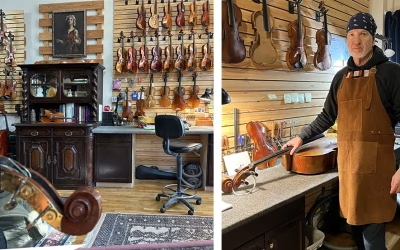
James Connell, Founder of Sol Vista Violins
For more than three decades, James Connell has supported the musical growth of students, families,...

What Voice Teachers Recommend for Young Singers Whose Voices Are Changing During Adolescence
When young singers start noticing their voices cracking, feeling different, or suddenly dropping...
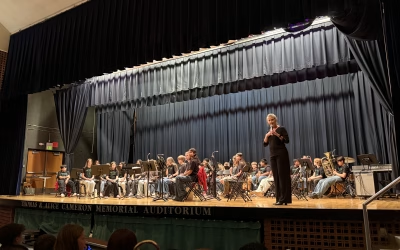
Jennifer Dunn
For nearly two decades, Jennifer Dunn has inspired hundreds of young musicians across the Boulder...

Trace Bundy
For more than two decades, Trace Bundy has been captivating audiences around the world with a...